


Caring for your Budgie
Budgies are social and intelligent, and can make highly rewarding and affectionate pets.
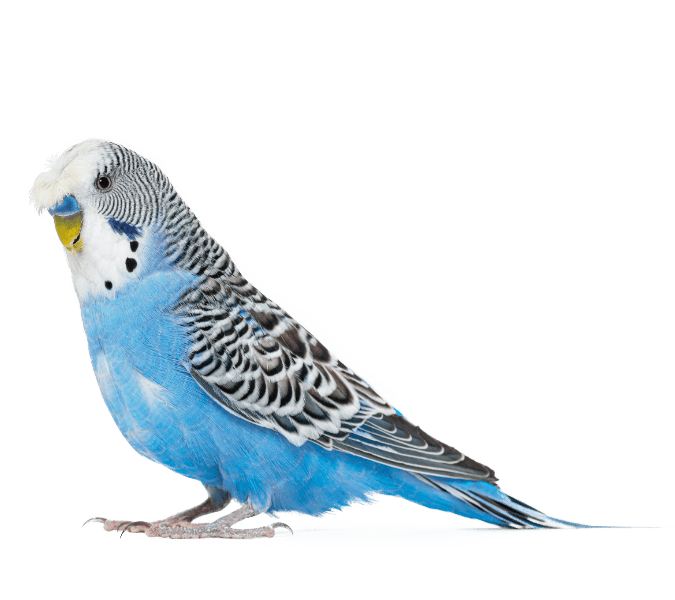
Helpful advice for budgie owners
Budgies generally live for 5-10 years sometimes even longer. Caring for a budgie involves providing proper housing, nutrition, social interaction, and healthcare. They can, when properly trained, view their human family as part of their flock and enjoy interacting.
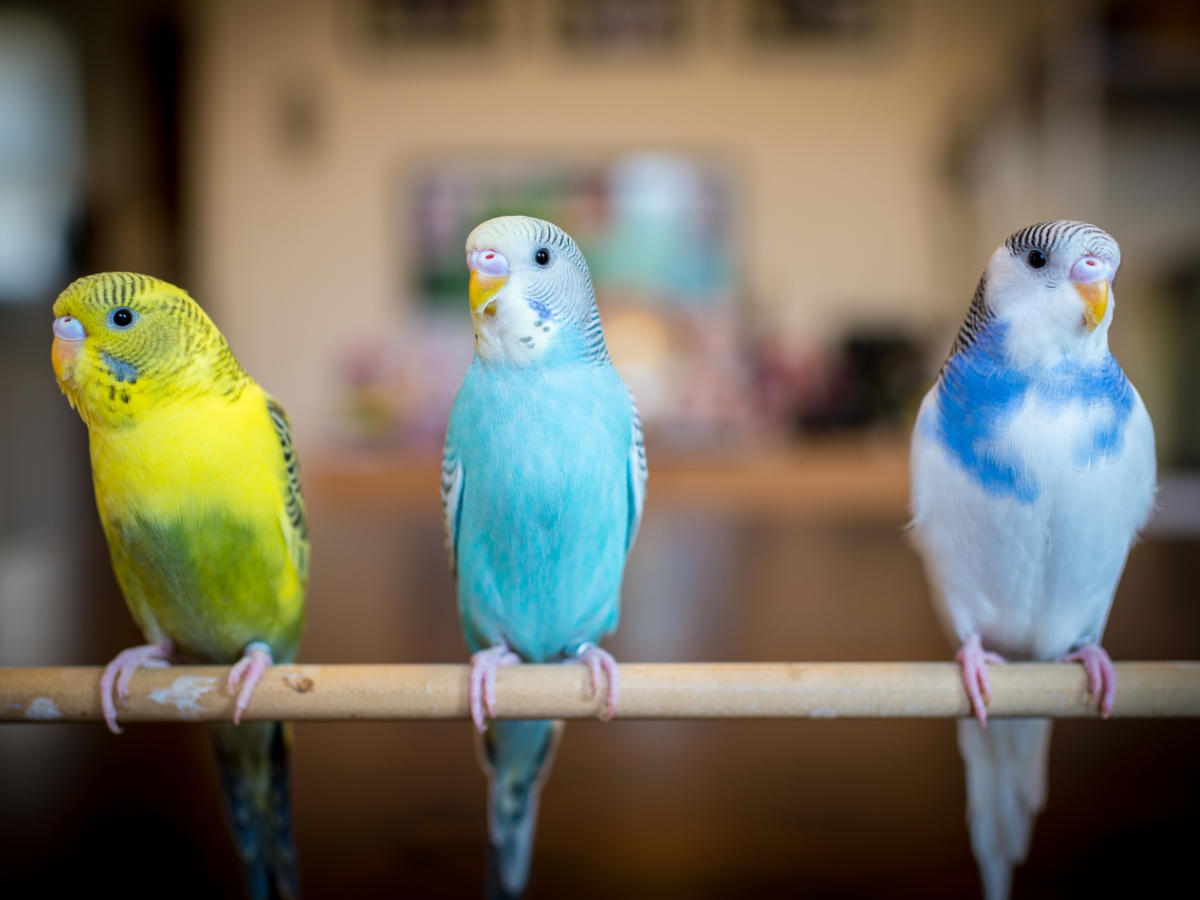
Looking after your budgie
Budgie housing
For cage sizing the rule is the bigger the better. Budgies fly horizontally so a wider cage is better than a taller one.
It should be in a bright area but not direct sunlight and not in the kitchen due to potential toxic fumes. Natural wood perches such as apple, willow or hazel are the best and varying thickness can help promote good foot health. Sandpaper perches should be avoided as they can damage the feet.
The cage liner should be changed regularly, the water and food dishes cleaned daily and the cage thoroughly cleaned once a week.
Budgies need 10-12 hours uninterrupted sleep, so keep their sleeping area dark and quiet.
Keeping your budgie entertained
Budgies are highly intelligent - they need lots of toys such as puzzle toys, foraging trays, chew toys made of safe wood, mirrors, bells, swings and ladders.
Toys should be rotated to help prevent boredom.
Allow supervised out of cage flying time as often as possible.
Bathing & feather care
Budgies should be offered a shallow bird bath once or twice a week using plain, clean lukewarm water. A spray bottle can be used to mist your budgie.
Feeding your budgie
Feed a high -quality seed mix that is clean and dust free. Grit is essential, both soluble and insoluble, as budgies don’t have any teeth and rely on grit to help them grind food in their gizzard.
Millet spray can be offered in small amounts. Budgies also enjoy small portions of fruit and vegetables such as broccoli, carrots, apple (no seeds), banana and grapes. Some fruit and vegetables are toxic so always check they are safe first.
Cuttlefish and iodine blocks are essential for mineral value, beak maintenance and entertainment. Water needs to be changed daily and should be available 24/7. A dropper bottle or bowl can be used - but a dropper bottle is better for preventing contamination.
Common budgie health problems
Budgies often hide illness, so phone your local surgery if you have any concerns.
Budgies can often suffer from respiratory infections, nutritional disorders, egg binding, tumours and parasitic infections like scaly face.
If you see any signs such as loss of appetite, difficulty breathing, changes in droppings, sitting at the bottom of the cage or sitting with fluffed-up feathers for a long time, please contact the surgery.
We're an RCVS accredited practice
Hafren Vets is accredited by the Royal College of Veterinary Surgeons

What our customers say...

Tom was my beloved companion for many years. When he completely lost one of his claws, the team at Hafren Vets treated him with such care and professionalism, removing part of his toe so it could heal properly. Thanks to their expertise, Tom made a great recovery and was soon back to his usual self. The staff were always so fond of Tom, who was well known as one of the biggest cats to visit the practice! He will always hold a special place in my heart, and I'll always be grateful to the team at Hafren Vets for the wonderful care they gave him.
Julie Rogers
Newtown
I have taken my beloved pets to Hafren Vets for many years , we have always found all the vets , nurses and receptionists to be very friendly, helpful and professional at all times , I wouldn’t hesitate to recommend their services and will continue to put my trust in the team always.
Julie Woolnough
Newtown
Since we moved to Newtown 49 years ago, we have always dealt with Hafren Vets and have found them to be very conscientious and excellent in what they do. Vets do come and go which is part of life but in our experience, they have always been replaced by someone who is as efficient as the previous one.
Lynn Rennett
Trefeglwys
Without the support, knowledge and advice from the nurses at Hafren Vets, these changes to Ruby’s health and wellbeing would have proved much more unmanageable.
Chloe Stanier
Newtown
I have always found Hafren Vets to be caring, friendly, and professional. A special mention must go to Lucy on reception in Newtown, who is exceptional at her job. She is always welcoming, helpful, and compassionate, and has made difficult times much easier. Her kindness and professionalism are truly appreciated.
Julie Joynes
Llanerfyl
On relocating here 20 years ago, my main priority was to find a first-class veterinary practice for my 7 dogs. Locals recommended Hafren Vets & I'm very pleased they did. The staff, from reception, nurses & vets are friendly, professional and approachable. The out of hours service is second to none. It's so reassuring to know that help is always there, whatever the time. I have built up a good relationship and, more importantly, trust with this practice & am grateful for all their excellent care & work.
Barbara Wharton
Dolfor