


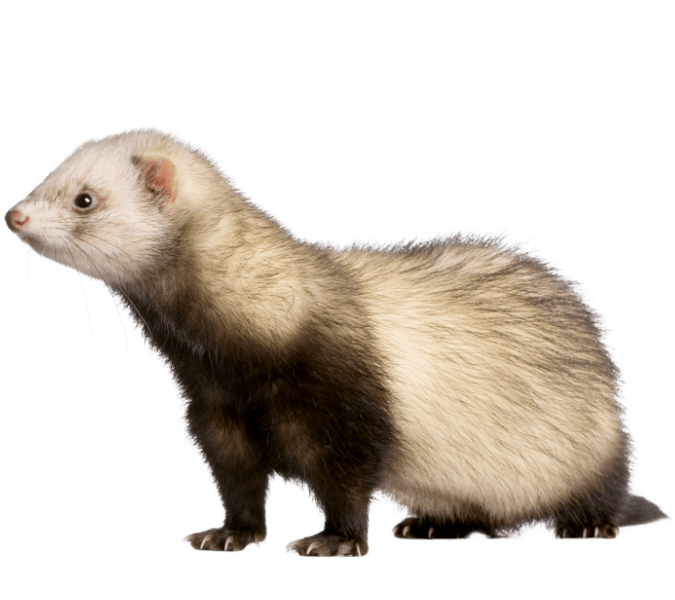
Ferrets make great pets...
...but they're not the easiest to handle and can bite hard if startled. Pet ferrets can live for up to 15 years, but the average lifespan is between six and 10 years.
Ferrets are very social and like to live in small groups, ideally with littermates of the same sex or neutered males and females.
Because of their strong smell, ferrets often live outdoors, but they can be kept as indoor pets too. They need a secure enclosure with lots of space to exercise and play.
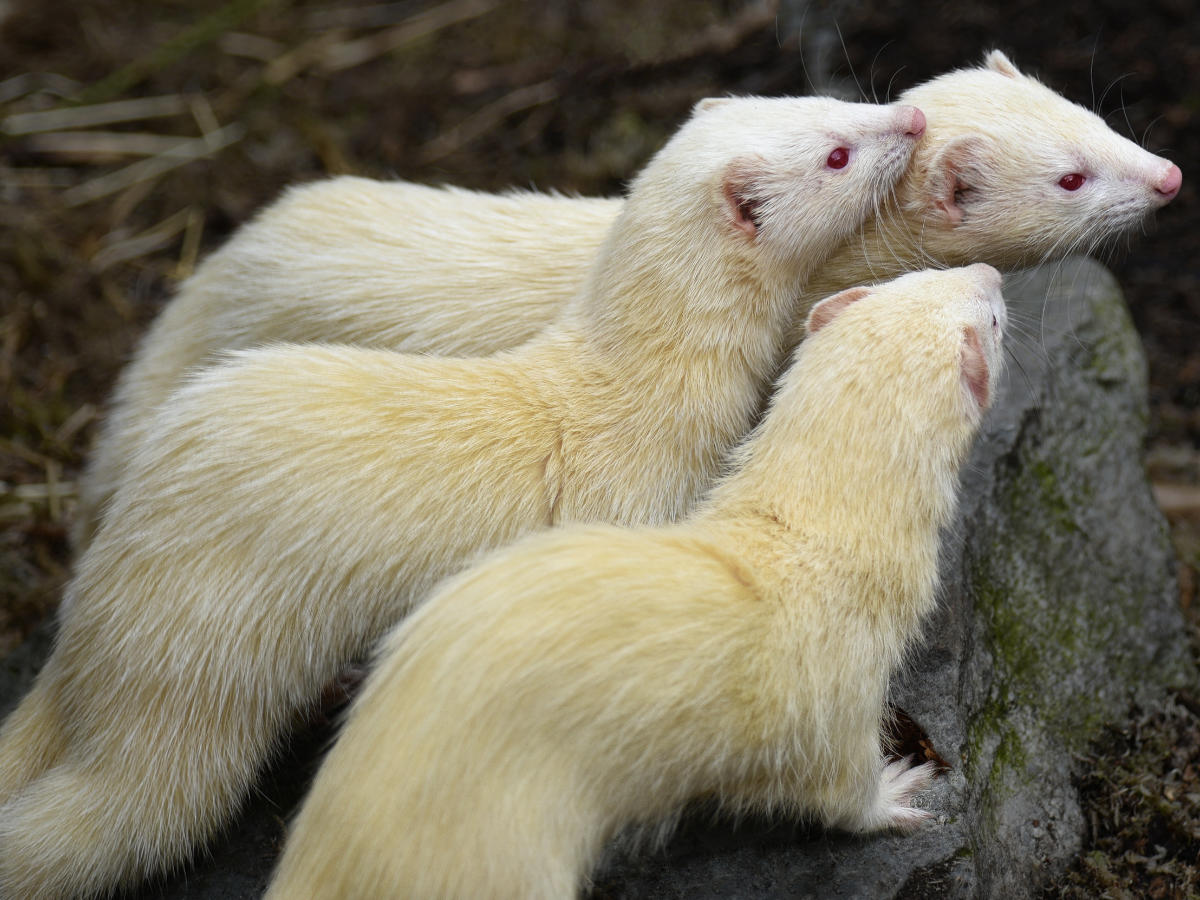
Ferret housing & care
Minimum space and housing requirements
The Blue Cross recommend a house that is at least 3 meters long x 2 meters high by 2 meters wide, but always buy the largest enclosure you can so they have plenty of room to exercise and play. The hutch must be out of direct sunlight, weatherproof and draught-proof. The wire bars used for the hutch should be strong and the spaces between them should be too small for ferrets to fit their heads through.
Bedding
Good quality hay or shredded paper can be used for bedding and the floor should be lined with newspaper and wood shavings. Fleece blankets, hammocks and fabric nesting boxes can be used for bedding. Litter trays should be cleaned every day and the rest of the ferret’s housing should be cleaned at least weekly. Ferrets will hide food, so it’s important to remove this when cleaning them out so it does not go mouldy.
Keeping your ferret entertained
Ferrets are naturally curious and like to interact with their owners. But they are very active and can get bored easily, so playtime is important.
Dry food can be scattered around their enclosure to encourage foraging or it can be placed in feeding toys. Ferrets will easily demolish many pet shop toys, so only sturdy toys should be used. Ferrets love tunnelling and climbing.
Using drainpipes and shelves in their enclosure is a good way of keeping them happy. They also like to sleep in hammocks which can be hung inside their enclosure. Ferrets should have daily exercise either in the house or in a large run, they can be trained to walk with a harness and lead, and can be taken outside to explore.
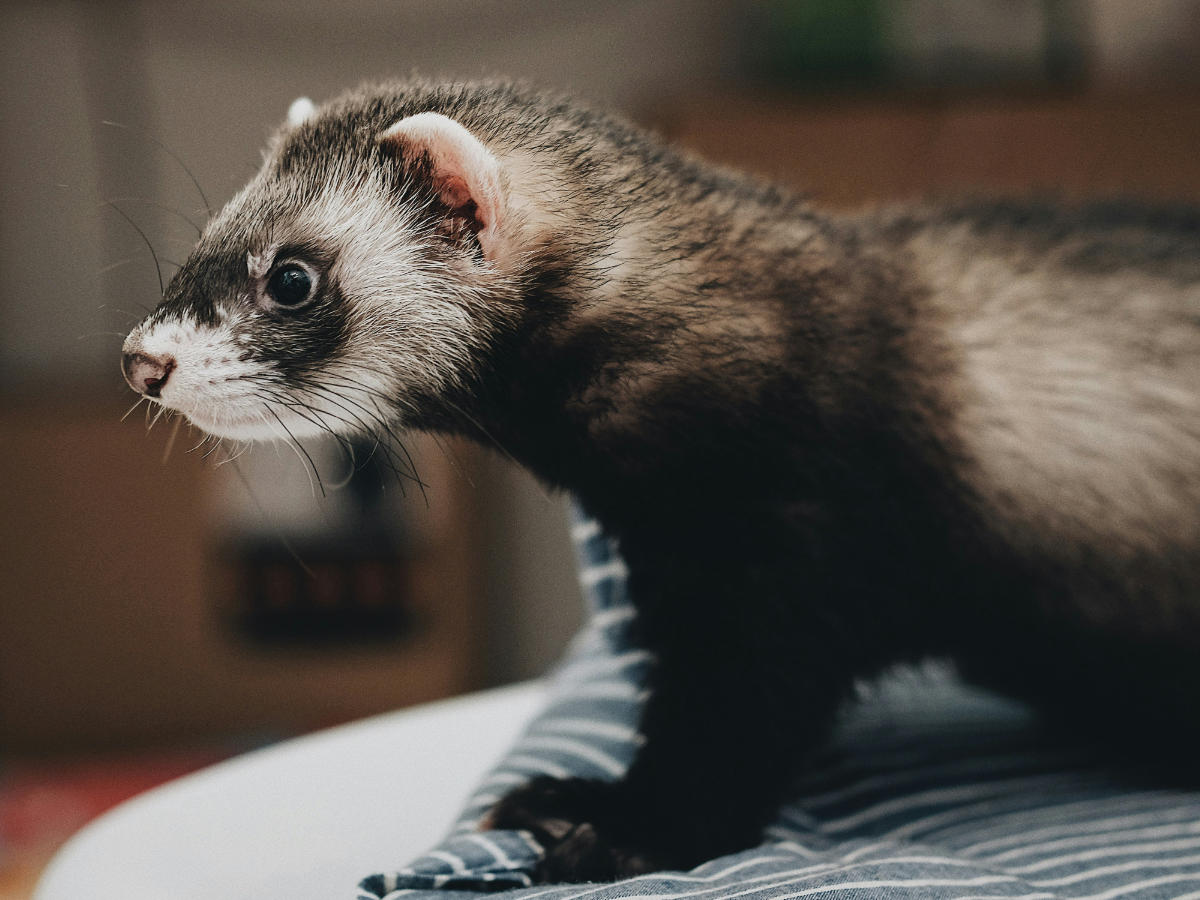
Looking after ferrets
Feeding ferrets
Ferrets are true carnivores, and need a high protein, high fat diet, and so it is best to feed a dry complete ferret food. Water should always be freely available and changed daily. Ferrets can be trained to drink from a gravity bottle or you can use a heavy bowl and these should be placed away from their litter tray.
Vaccination and microchipping
Ferrets can be vaccinated once a year against distemper. This an uncommon but serious disease in ferrets, which generally starts with coughing, sneezing and discharges from the eyes and nose.
Microchipping your ferret is very important. Ferrets are keen escape artists and a microchip means they can be traced to their owners if they go missing.
Neutering
Neutering a male ferret (hob) involves three options – castration, vasectomy or hormone implants. Please contact the surgery to discuss which would be best for your pet.
Female ferrets (jills) can be spayed. Jills come into season approximately March to September as the day length starts to increase. At this time the high level of oestrogen can cause a life threatening anaemia. Please contact the surgery to discuss the options to prevent this.
Health problems
From time to time you may be concerned about your ferrets’ health. Contact the surgery if you notice any changes in your ferrets’ eating, drinking and toilet habits.
Ferrets’ nails grow continually so they need to be clipped. Long nails can make walking uncomfortable and lead to joint and back problems.
Common health problems include diarrhoea, hair loss, obesity, dental disease and anaemia. If you have any concerns about your ferret please contact the surgery.
We're an RCVS accredited practice
Hafren Vets is accredited by the Royal College of Veterinary Surgeons

What our customers say...

I have taken my beloved pets to Hafren Vets for many years , we have always found all the vets , nurses and receptionists to be very friendly, helpful and professional at all times , I wouldn’t hesitate to recommend their services and will continue to put my trust in the team always.
Julie Woolnough
Newtown
Tom was my beloved companion for many years. When he completely lost one of his claws, the team at Hafren Vets treated him with such care and professionalism, removing part of his toe so it could heal properly. Thanks to their expertise, Tom made a great recovery and was soon back to his usual self. The staff were always so fond of Tom, who was well known as one of the biggest cats to visit the practice! He will always hold a special place in my heart, and I'll always be grateful to the team at Hafren Vets for the wonderful care they gave him.
Julie Rogers
Newtown
Without the support, knowledge and advice from the nurses at Hafren Vets, these changes to Ruby’s health and wellbeing would have proved much more unmanageable.
Chloe Stanier
Newtown
Since we moved to Newtown 49 years ago, we have always dealt with Hafren Vets and have found them to be very conscientious and excellent in what they do. Vets do come and go which is part of life but in our experience, they have always been replaced by someone who is as efficient as the previous one.
Lynn Rennett
Trefeglwys
On relocating here 20 years ago, my main priority was to find a first-class veterinary practice for my 7 dogs. Locals recommended Hafren Vets & I'm very pleased they did. The staff, from reception, nurses & vets are friendly, professional and approachable. The out of hours service is second to none. It's so reassuring to know that help is always there, whatever the time. I have built up a good relationship and, more importantly, trust with this practice & am grateful for all their excellent care & work.
Barbara Wharton
Dolfor
I have always found Hafren Vets to be caring, friendly, and professional. A special mention must go to Lucy on reception in Newtown, who is exceptional at her job. She is always welcoming, helpful, and compassionate, and has made difficult times much easier. Her kindness and professionalism are truly appreciated.
Julie Joynes
Llanerfyl