


Caring for guinea pigs
Guinea pigs are loveable, sociable animals that make good family pets. They should be kept in pairs and live on average around five to seven years.
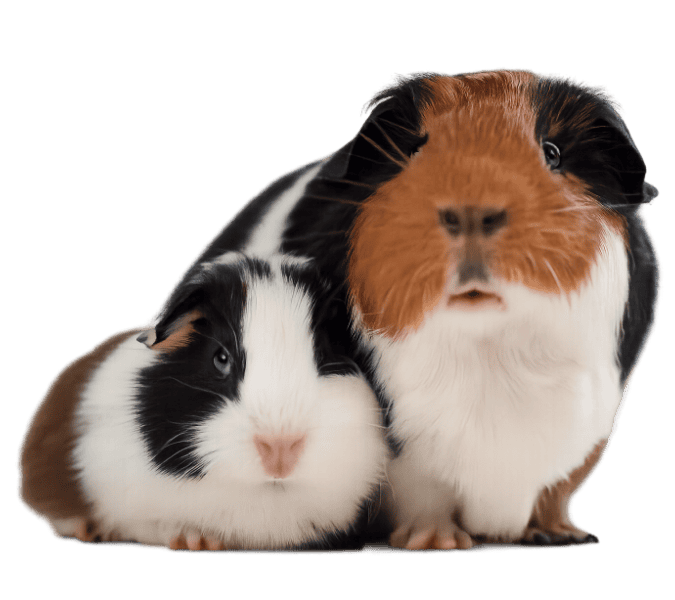
Provide a safe, social home for your guinea pigs
Being a prey species it is important to handle guinea pigs gently so as not to frighten them. Guinea pigs should be kept in a secure enclosure that provides plenty of space to run around and places to hide.
Guinea pig health problems
From time to time you may be concerned about your guinea pigs' health. Contact the surgery if you notice any changes in your guinea pigs' eating, drinking and toilet habits. Common health problems include dental disease, vitamin C deficiency, abscesses, sore feet, respiratory infections and urinary problems.
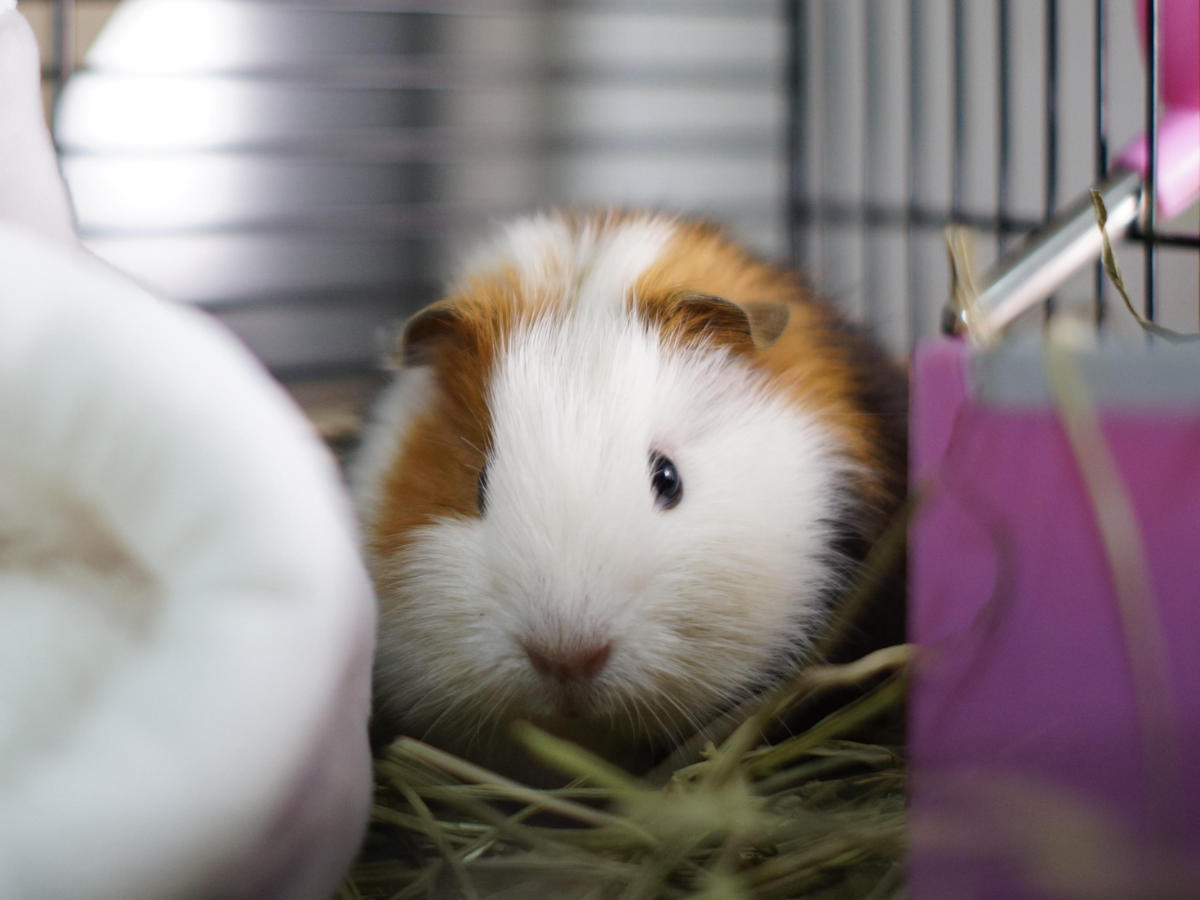
Guinea pig housing & care
Minimum space and housing requirements
The minimum space for a guinea pig enclosure recommended by the RSPCA is 120cm x 60cm x 45cm. Ideal housing should have as much space as you can over the minimum. Cages should always be in quiet, safe areas away from dogs, cats and other predators. Guinea pigs are active for about 20 hours a day, so it’s important to give them plenty of space to run around.
Outdoor runs
Guinea pigs need exposure to sunlight and grazing on grass is an important part of their management. Outdoor runs must be predator proof and have a sheltered area for protection against hot weather, cold or rain. Guinea pigs don’t cope well with big changes in temperature so when you bring your guinea pig inside in winter, make sure you wait for the right temperature to reintroduce them to outside again.
Bedding
Guinea pigs need a solid floor with a good depth of dust free litter (shredded paper or wood shavings) or hay. Don’t use soft woods such as pine or cedar as these can cause illness. Bedding should be changed 1-2 times a week, along with spot cleaning daily, to help to protect against feet infections (pododermatits). Good cage hygiene and adequate ventilation can also help to prevent respiratory tract infections. Overgrown claws can develop if the flooring is inadequate to wear these down.
Keeping your guinea pig entertained
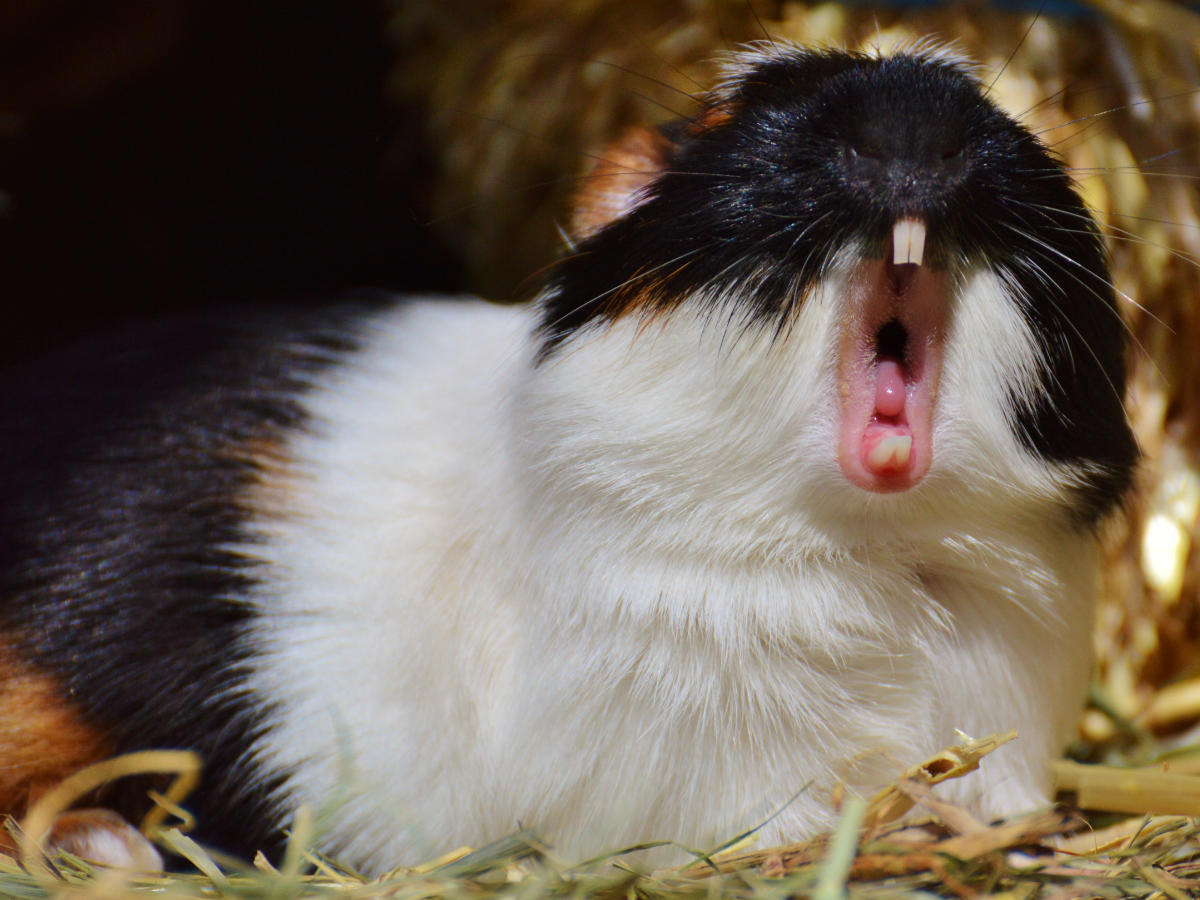
Guinea pigs are social animals and are happiest living in pairs. Keep a same-sex pair together to ensure you don’t have any unwanted litters or contact the surgery to discuss neutering of mixed sex pairs. Give them tunnels and untreated wooden toys to chew on. Guinea pigs incisor teeth grow continuously so they need untreated wooden toys, bits of fruit trees (not poisonous ones)or willow sticks to chew in order to wear the teeth down.
Guinea pigs and rabbits
Rabbits should not be kept with guinea pigs. They have different dietary requirements and rabbits can often bully guineas pigs. Rabbits also carry a bacteria, Bordetella Bronchiseptica, which can cause fatal respiratory infection in guinea pigs.
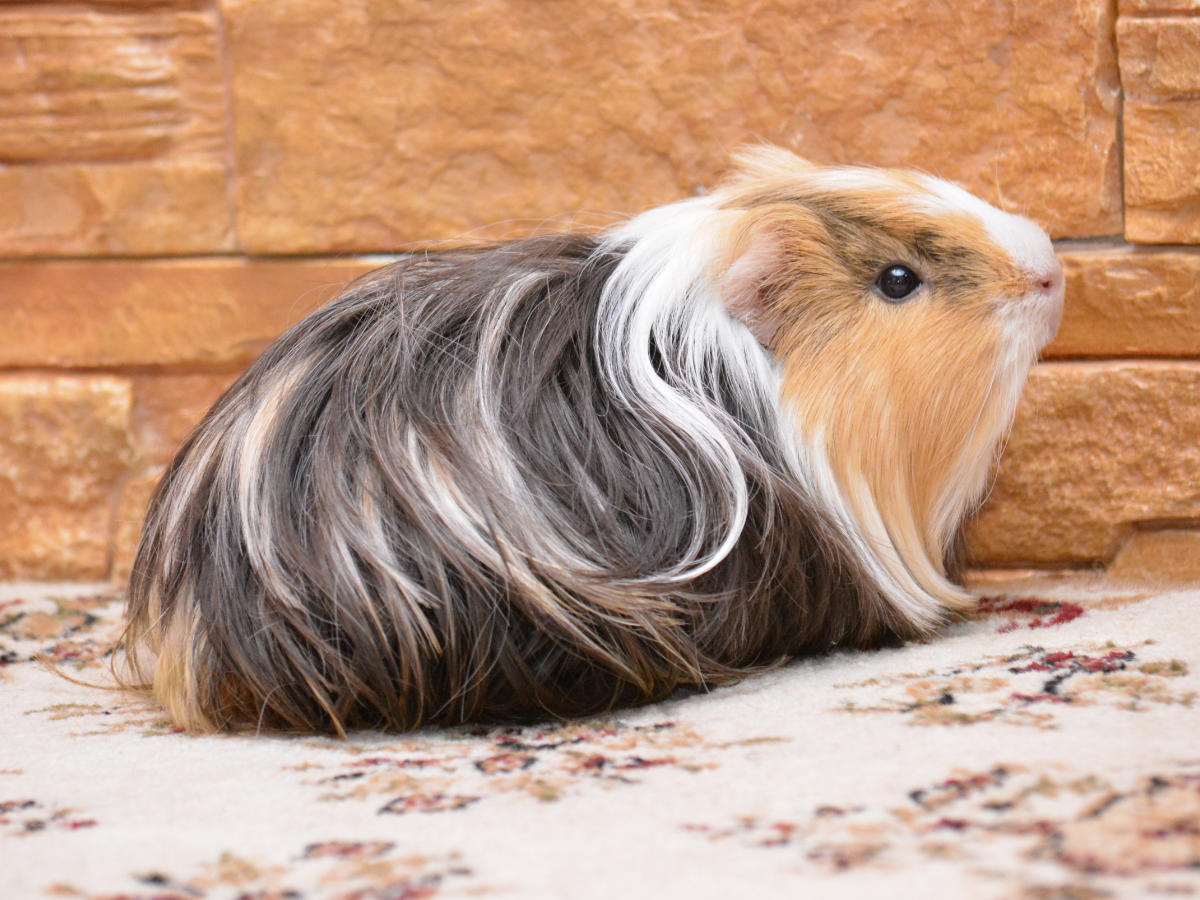
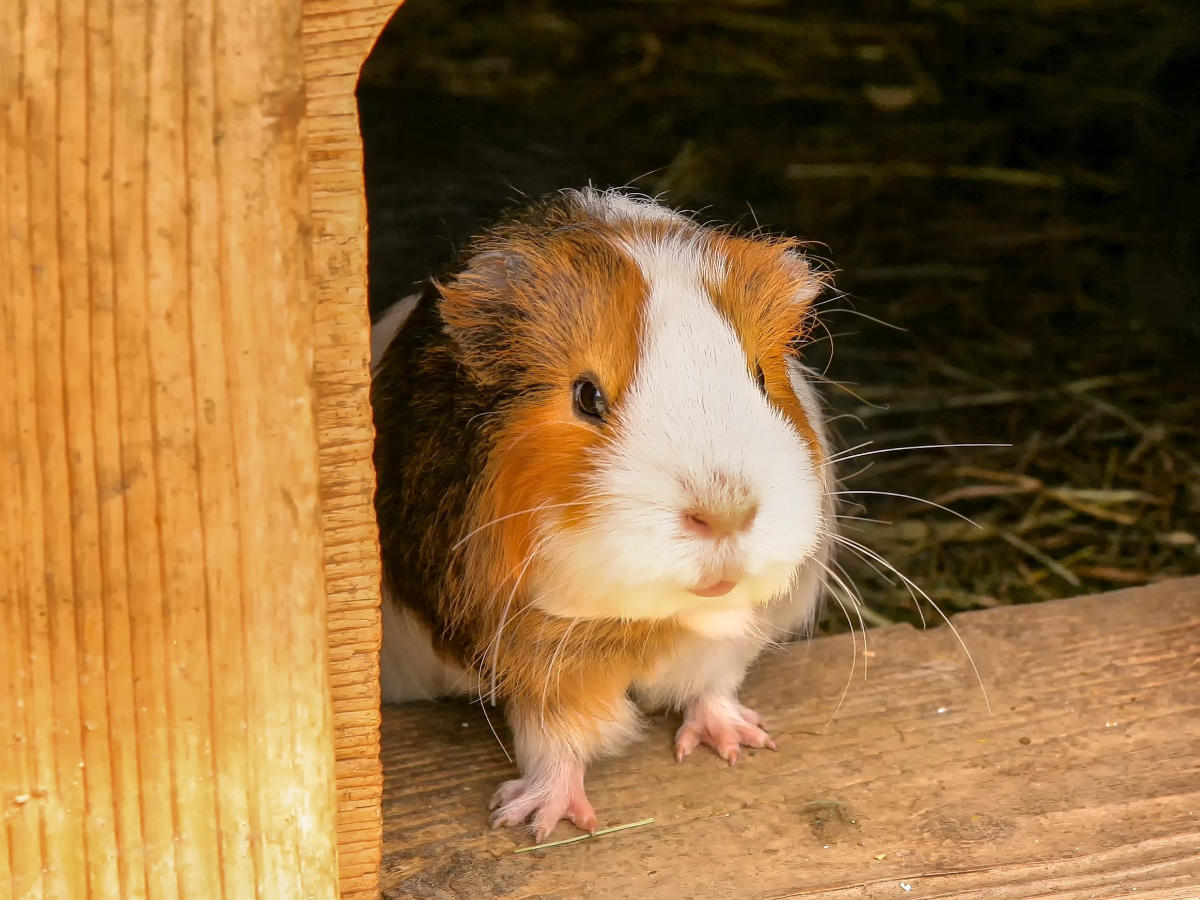
Feeding guinea pigs
A healthy diet
A healthy guinea pig's diet should consist of as much good quality hay and grass (not lawnmower cuttings) as possible. A small amount of commercial grass based guinea pig pellets (not muesli), and vegetables and fruit, that are non-poisonous to guinea pigs can be added. Avoid sudden changes in their diet and introduce new foods gradually.
Fibre and hay
Good quality hay (timothy, meadow or grass hays are best) should make up most of the diet along with some fresh grass. Fibre aids with digestion and is very important for wearing down their continuously growing teeth. The wrong diet can cause serious dental disease.
Vitamin C is essential
Guinea pigs are one of the few animals, along with humans, that can’t manufacture their own vitamin C so they need to get it from their diet. Pellets do contain vitamin C but the level reduces with storage time. Supplementing vitamin C can be achieved by crushing a vitamin C tablet and sprinkling a small pinch onto their food. Vitamin C is unstable in water.
Variety of foods
Guinea pigs develop preferences for food early in life and so it is important to expose young guinea pigs to a variety of food.
Providing fresh water daily
Fresh water must be provided every day. If using sipper bottles, these must be checked daily to ensure they are working. Ensure the water doesn’t freeze in the winter, without water guinea pigs become seriously ill.
Vegetables, fruits and salads
Guinea pigs need the right vegetables and leafy greens. Many of these can be poisonous, so always check before feeding them. Safe foods include cucumber, peppers, celery and broccoli. For a comprehensive list of safe and poisonous foods please see the RVC Feeding your Guinea Pig information sheet.
We're an RCVS accredited practice
Hafren Vets is accredited by the Royal College of Veterinary Surgeons

What our customers say...

I have always found Hafren Vets to be caring, friendly, and professional. A special mention must go to Lucy on reception in Newtown, who is exceptional at her job. She is always welcoming, helpful, and compassionate, and has made difficult times much easier. Her kindness and professionalism are truly appreciated.
Julie Joynes
Llanerfyl
Since we moved to Newtown 49 years ago, we have always dealt with Hafren Vets and have found them to be very conscientious and excellent in what they do. Vets do come and go which is part of life but in our experience, they have always been replaced by someone who is as efficient as the previous one.
Lynn Rennett
Trefeglwys
Tom was my beloved companion for many years. When he completely lost one of his claws, the team at Hafren Vets treated him with such care and professionalism, removing part of his toe so it could heal properly. Thanks to their expertise, Tom made a great recovery and was soon back to his usual self. The staff were always so fond of Tom, who was well known as one of the biggest cats to visit the practice! He will always hold a special place in my heart, and I'll always be grateful to the team at Hafren Vets for the wonderful care they gave him.
Julie Rogers
Newtown
Without the support, knowledge and advice from the nurses at Hafren Vets, these changes to Ruby’s health and wellbeing would have proved much more unmanageable.
Chloe Stanier
Newtown
I have taken my beloved pets to Hafren Vets for many years , we have always found all the vets , nurses and receptionists to be very friendly, helpful and professional at all times , I wouldn’t hesitate to recommend their services and will continue to put my trust in the team always.
Julie Woolnough
Newtown
On relocating here 20 years ago, my main priority was to find a first-class veterinary practice for my 7 dogs. Locals recommended Hafren Vets & I'm very pleased they did. The staff, from reception, nurses & vets are friendly, professional and approachable. The out of hours service is second to none. It's so reassuring to know that help is always there, whatever the time. I have built up a good relationship and, more importantly, trust with this practice & am grateful for all their excellent care & work.
Barbara Wharton
Dolfor