


Caring for your Tortoise
Tortoises are fascinating, long-lived reptiles that can make rewarding companions when provided with the correct care. Many tortoise species can live for 50 years or more, making them a lifelong commitment. In general tortoises like to live on their own.
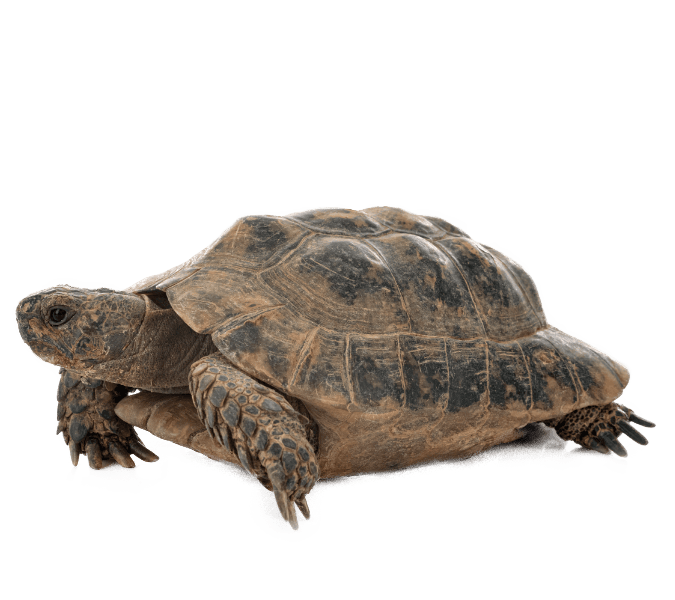
Helpful advice for tortoise owners
Tortoises have highly specific environmental, dietary, and health requirements. Proper husbandry is essential to prevent many of the commonly seen illnesses.
The 49 species of tortoise range dramatically in size, from tiny padlopers to giant tortoises. The most common tortoise kept in the UK is the Hermann Tortoise and is known for its curious and docile nature.
Tortoises carry the bacteria salmonella, so good hand hygiene when handling and cleaning is essential.
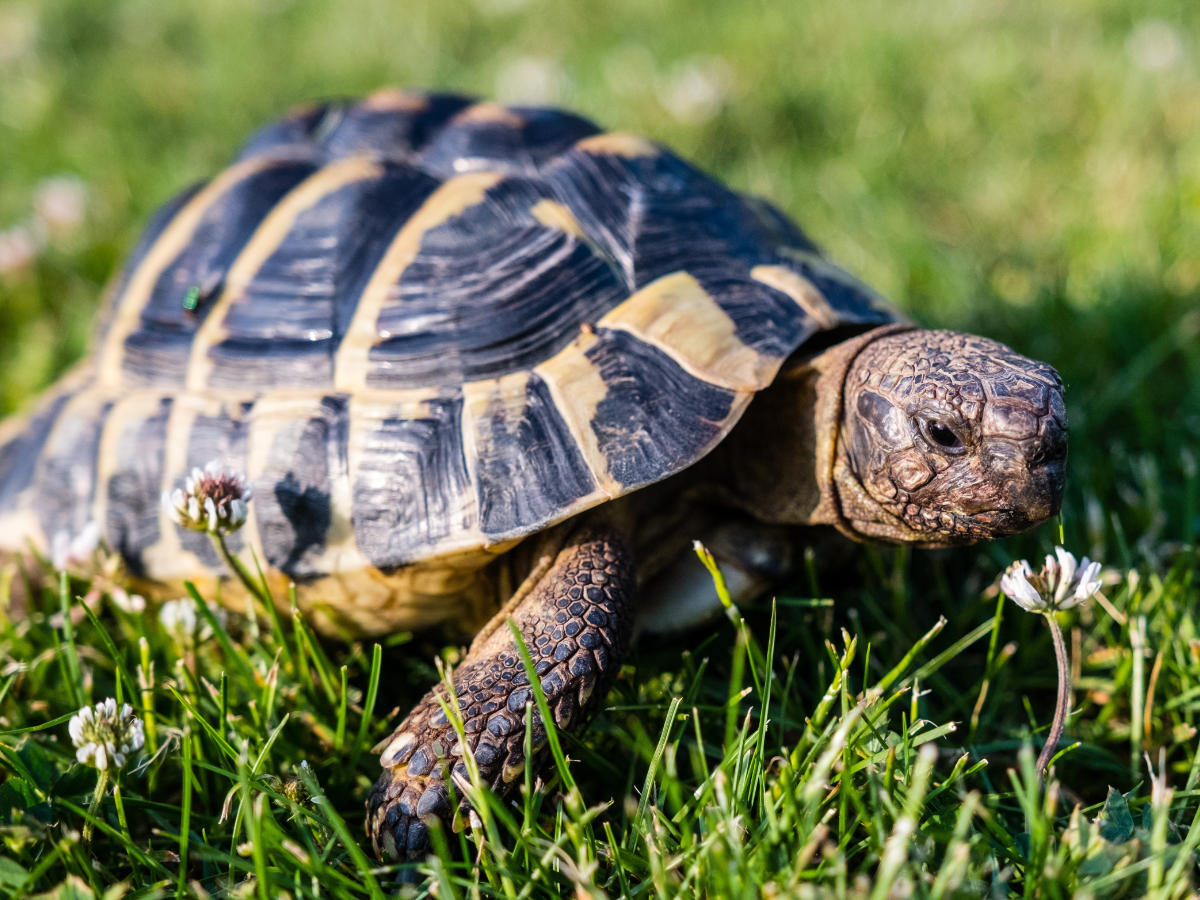
Looking after your tortoise
Tortoise housing
Outdoor
Whenever warmer weather allows, many tortoise species can live in secure outdoor enclosures that provide natural sunlight and opportunities to graze. Outdoor pens need escape-proof fencing that goes below ground level; sunny, shaded and sheltered areas; and fresh water that is available all the time.
Indoor
When housed indoors, Tortoises need a spacious enclosure with adequate ventilation, hiding places and fresh water available at all times. A shallow water dish is the most suitable.
Temperature & lighting for tortoises
Tortoises are ectothermic animals and rely on external heat sources to regulate their body temperature. UVB lighting is essential for calcium metabolism and healthy bone development. UVB lights need to be replaced regularly according to the manufacturers’ recommendations.
Tortoises need a basking area at the appropriate temperature for the species, and cooler areas. Ideally at least two hides in the enclosure, one on the warm side and one on the cold side, so the tortoise can regulate its temperature.
Bedding & cleaning tortoise housing
To pick the right bedding, consider your tortoise's specific natural habitat and needs. Generally, a 50/50 mix of organic topsoil and coco coir is ideal. It holds moisture for burrowing and is safe if ingested. Other choices include fine-grade orchid bark (fir) and pre-mixed tortoise soils.
Avoid sand, newspaper, wood shavings (pine or cedar) and gravel/pebbles. All of these can be dangerous when eaten, toxic, or prevent natural digging behaviours.
Spot clean the enclosure daily, removing soiled bedding, uneaten food and droppings. Clean the entire enclosure every 3 to 4 weeks or more frequently if needed.
Feeding tortoises
Most commonly kept tortoise species are herbivores and require a diet rich in fibre and calcium. Commercial tortoise diets are available but they usually need to be supplemented with fresh foods such as dandelion leaves, rocket, pea shoots and the occasional vegetable such as cucumber, cauliflower including the leaves, and carrot. Some fruit and vegetables are toxic so always check they are safe first.
Although tortoises are adapted to dry environments, they still require access to fresh drinking water at all times. Young tortoises can benefit from regular shallow soaks, as this can help maintain hydration and support healthy urinary and bowel function.
Tortoise hibernation
Though not all tortoise species naturally hibernate, hibernation is a natural part of many tortoises’ annual cycle. During hibernation, a tortoise's metabolism slows significantly, allowing it to conserve energy during colder months when food is scarce.
Hibernation can carry risks if your tortoise is not healthy and only healthy well-nourished tortoises should be allowed to hibernate. If you have any concerns about hibernation please give the surgery a call.

We're an RCVS accredited practice
Hafren Vets is accredited by the Royal College of Veterinary Surgeons

What our customers say...

Tom was my beloved companion for many years. When he completely lost one of his claws, the team at Hafren Vets treated him with such care and professionalism, removing part of his toe so it could heal properly. Thanks to their expertise, Tom made a great recovery and was soon back to his usual self. The staff were always so fond of Tom, who was well known as one of the biggest cats to visit the practice! He will always hold a special place in my heart, and I'll always be grateful to the team at Hafren Vets for the wonderful care they gave him.
Julie Rogers
Newtown
I have always found Hafren Vets to be caring, friendly, and professional. A special mention must go to Lucy on reception in Newtown, who is exceptional at her job. She is always welcoming, helpful, and compassionate, and has made difficult times much easier. Her kindness and professionalism are truly appreciated.
Julie Joynes
Llanerfyl
I have taken my beloved pets to Hafren Vets for many years , we have always found all the vets , nurses and receptionists to be very friendly, helpful and professional at all times , I wouldn’t hesitate to recommend their services and will continue to put my trust in the team always.
Julie Woolnough
Newtown
On relocating here 20 years ago, my main priority was to find a first-class veterinary practice for my 7 dogs. Locals recommended Hafren Vets & I'm very pleased they did. The staff, from reception, nurses & vets are friendly, professional and approachable. The out of hours service is second to none. It's so reassuring to know that help is always there, whatever the time. I have built up a good relationship and, more importantly, trust with this practice & am grateful for all their excellent care & work.
Barbara Wharton
Dolfor
Since we moved to Newtown 49 years ago, we have always dealt with Hafren Vets and have found them to be very conscientious and excellent in what they do. Vets do come and go which is part of life but in our experience, they have always been replaced by someone who is as efficient as the previous one.
Lynn Rennett
Trefeglwys
Without the support, knowledge and advice from the nurses at Hafren Vets, these changes to Ruby’s health and wellbeing would have proved much more unmanageable.
Chloe Stanier
Newtown